
Home/Reverse Engineering
Reverse Engineering & Legacy Component Replication
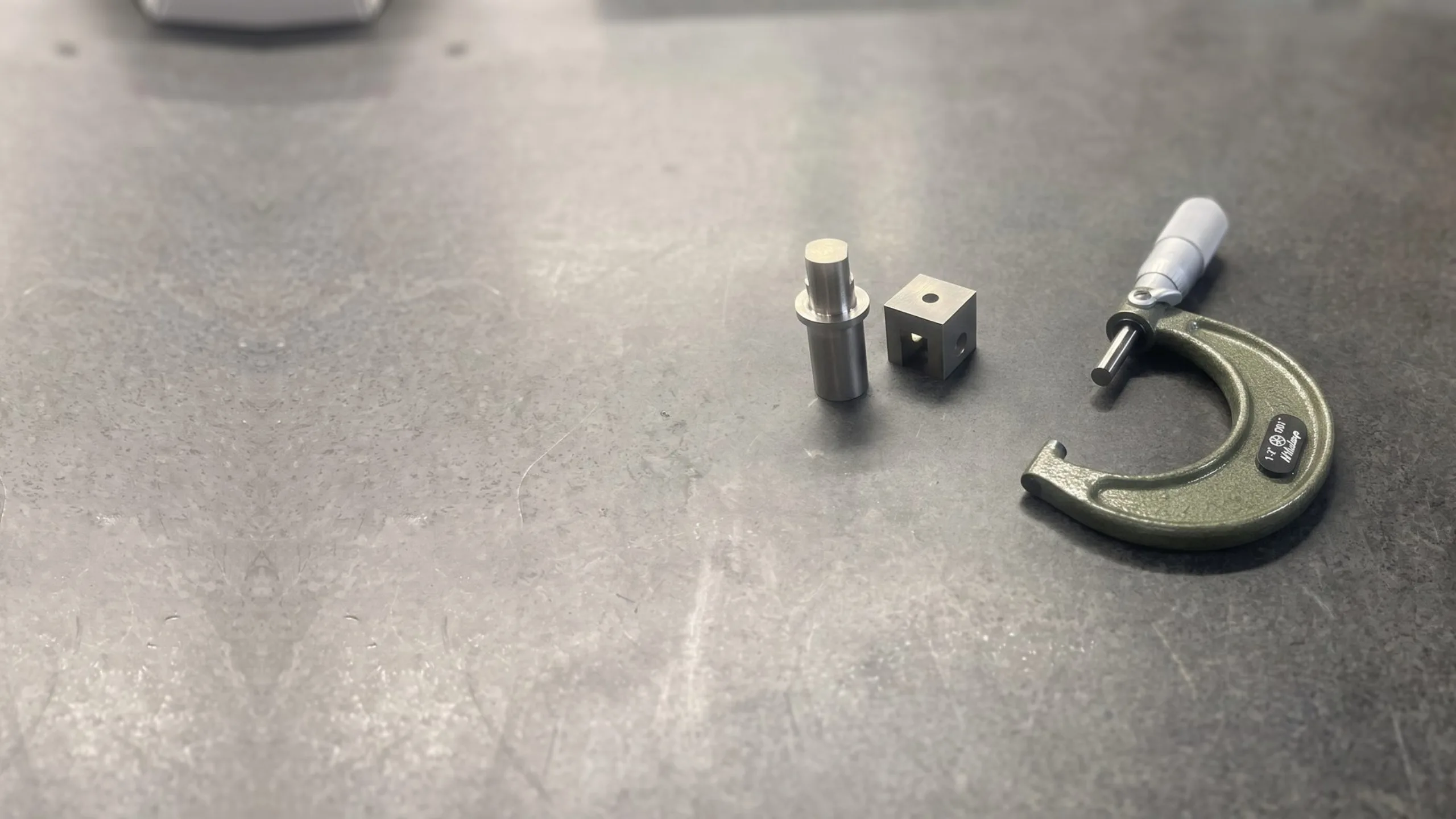
Reverse engineering captures the exact physical geometry of an existing component to reconstruct a production-ready CAD model and print when original drawings are unavailable. Critical Dimensions CNC handles both the precision measurement and the final CNC machining in-house. Rather than splitting responsibility between an outside engineering firm and a separate machine shop, your component is measured, modeled, and manufactured under one roof from a single vendor.
The scenario is familiar across industrial and aerospace operations.
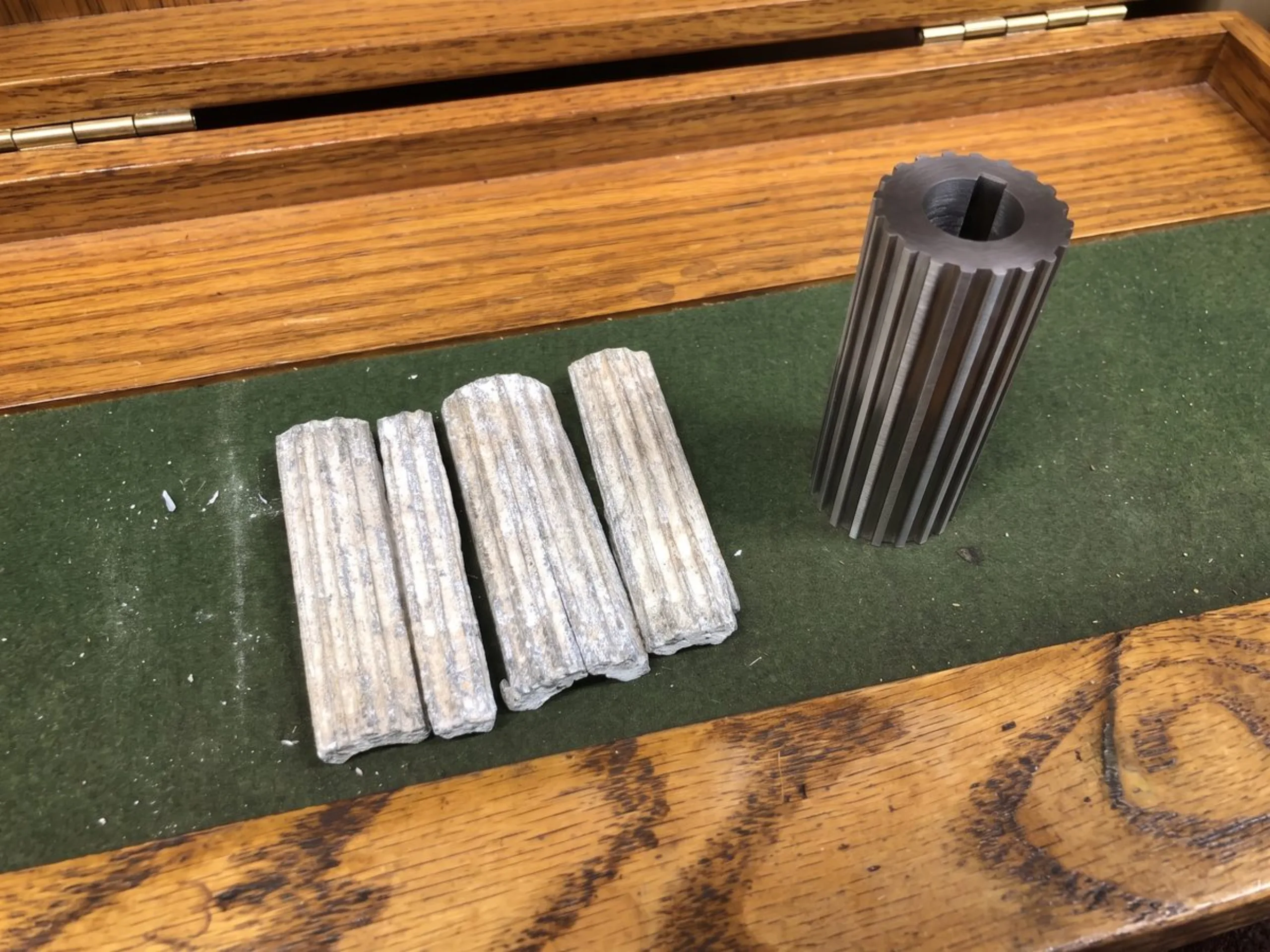
A critical component fails on high-value equipment with years of service life remaining, yet the OEM is shuttered, prints were never created, or legacy documentation has disappeared. All that remains is the damaged part itself. That physical sample still holds every critical dimension required for reproduction—provided it is captured with precision metrology and sound engineering judgment.
What Every Reverse Engineering Job Includes
We apply the same disciplined measurement verification, engineering review, and post-machining inspection to every order—ensuring repeatable dimensional accuracy from a single replacement part to multi-unit production batches.
- Precision Metrology & CAD Modeling. Physical parts measured and reconstructed into production-ready 3D models and 2D prints when drawings are unavailable.
- Wear & Fitment Analysis. Critical mating interfaces, threads, and worn features evaluated to restore original design intent—not just copy damage.
- Rapid Fit-Check Prototyping. In-house 3D printing available to validate form and assembly fitment prior to final CNC machining.
- Seamless In-House Execution. CAM programming, CAD Modeling, 3D Printing, and CNC machining completed under the same roof, eliminating vendor handoffs.
- Close-Tolerance Accuracy. Replacement components machined to tolerances as tight as .0001″ where necessary.
- Documented Inspection. Parts verified against reconstructed print requirements.
How Reverse Engineering Works at Critical Dimensions CNC
Describe the Part
Reach out through the website form or by email to [email protected]. Phone conversations start at (443) 517-9123, Monday–Friday, 8am–6pm.
Send the Sample
The existing part becomes the reference. A worn or broken sample carries most of the geometry needed.
Measurement and Modeling
Dimensions get captured and turned into a model that can drive a toolpath.
Review Before Cutting
You confirm the model reflects what the part has to do. A dimension that was worn away on the sample gets discussed at this stage rather than discovered after production.
Machining and Inspection
The replacement gets machined and inspected to an AQL of 1.0%, Level II per ANSI/ASQ Z1.4. Invoicing follows on Net 15 terms.
Can You Manufacture a Part Without a Drawing?
Yes. When original documentation is missing, the physical part serves as our blueprint. Precision measuring equipment captures the exact geometry, which we use to reconstruct a clean CAD model and program the CNC toolpaths. Because Critical Dimensions CNC handles both the digital modeling and the machining under one roof, critical tolerance and datum intent are never lost in translation between an outside engineering firm and the shop floor.
Additional Services That Support Reverse Engineered Parts
Reverse engineered parts leave the shop for Aerospace & Defense, electronics, robotics, medical, marine, and automotive customers.
 CNC Milling
Milling on CNC machining centers, plus conventional milling for work that does not require a full CNC setup.
 CNC Turning
Turned parts on live tooling capable equipment, so milled features can be completed in the same setup.
 3D Printing
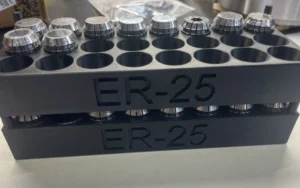
Printed parts produced in house on the shop's own printers.
What Happens If the Original Part Is Worn or Damaged?
Wear is corrected rather than copied. A shaft with decades of service will be undersized at its bearing surfaces, and replicating that wear only repeats the failure. We use your sample's measurements as a baseline, confirming critical mating dimensions and functional tolerances before cutting the material.
Why Legacy Equipment Runs Out of Parts
The problem reverse engineering solves shows up in federal data. The U.S. Government Accountability Office reviewed 18 types of Army and Marine Corps ground vehicles and found that two challenges affected every single one: a shortage of parts and material, and the absence of current technical data or drawings.
The GAO report documents what happens when replacement parts stop flowing. Army depot overhauls dropped from 1,278 in fiscal year 2015 to 12 in fiscal year 2024, and the Army partially covered the gap by harvesting parts from vehicles being retired. Mission capable rates declined for 16 of the 18 vehicles reviewed while maintenance costs rose.
Defense fleets face this at scale. A manufacturer running a twenty-year-old production line faces the same problem with a smaller budget and no depot to fall back on. Either way, the fix starts with the part in hand.
Frequently Asked Questions About Reverse Engineering
What Do I Need to Send for a Reverse Engineering Quote?
Submit a brief overview of the component, its mechanical function, and any available photos or reference dimensions through our website form or directly to [email protected]. For immediate phone consultations, call (443) 517-9123 Monday through Friday, 8:00 AM – 6:00 PM EST.
Can Critical Dimensions CNC reverse engineer a broken part?
A broken or worn sample carries most of the geometry. Missing or damaged features get discussed against the part's function before machining begins, which is why the review step comes before anything gets cut.
What Materials Can Be Reverse Engineered and Machined?
We measure and machine components across a wide material spectrum—from engineered plastics and non-ferrous metals to high-temp alloys and hardened steels. Replacement parts can be manufactured in the exact original specification or upgraded to an alternative alloy or polymer whenever wear resistance, thermal stability, or load demands require a stronger solution.
Can Critical Dimensions CNC Make Just One Replacement Part?
Absolutely. Single-unit replacements and low-volume runs are a core reason engineering and maintenance teams partner with us. While larger vendors build their schedules around high-volume production and routinely decline one-off jobs, our workflow can be structured for rapid, small-batch execution.
Ready to Get Your Part Measured and Quoted?
Reverse engineering succeeds when the shop capturing the measurements is the exact same shop cutting the material. Critical Dimensions CNC manages your entire project under one roof, from initial sample inspection on the bench through final replacement delivery. Submit a description or photo of your component today for a direct engineering review and quote.