
Home/CNC Turning
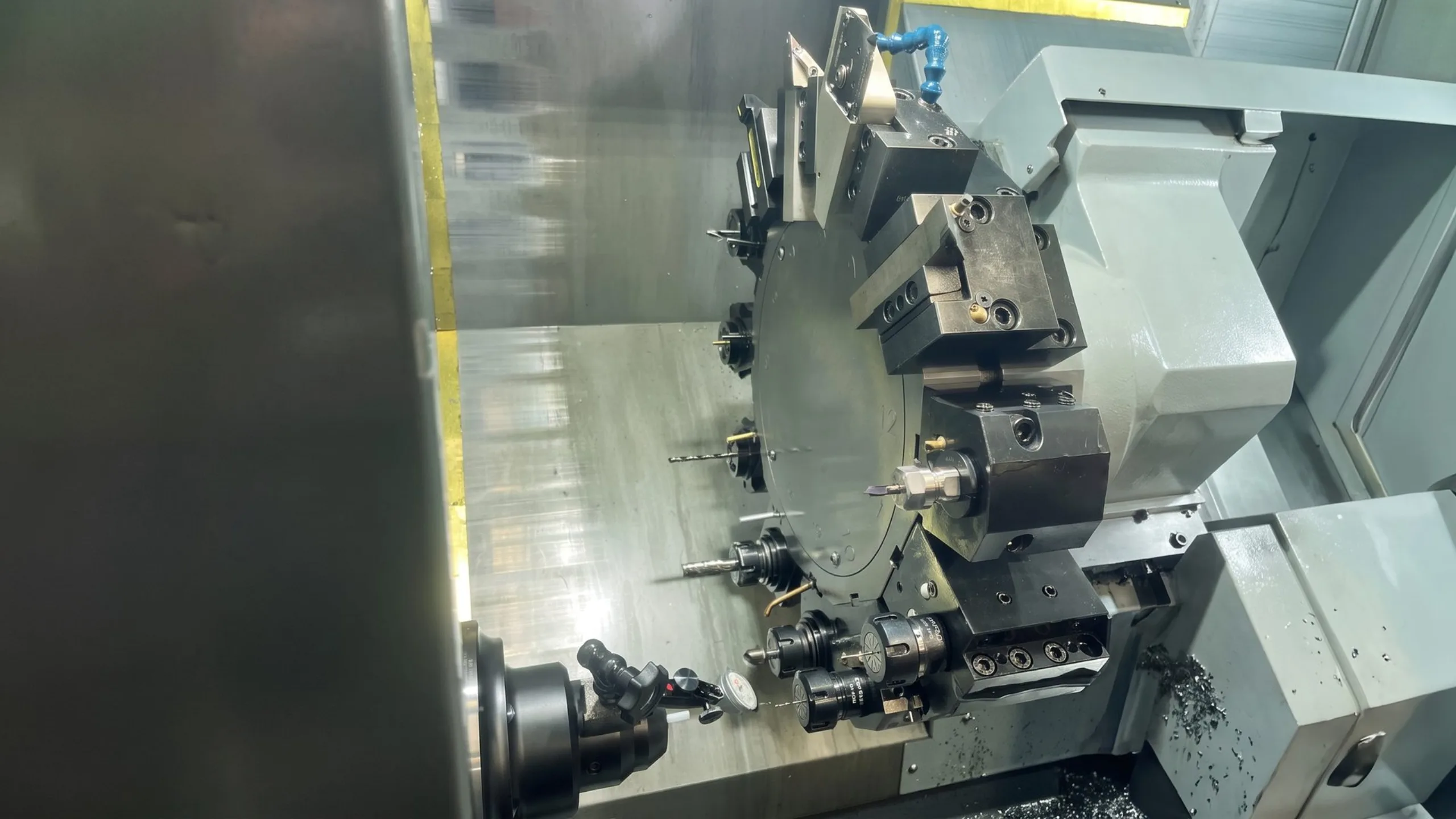
CNC Turning w/ Live-Tooling Capabilities
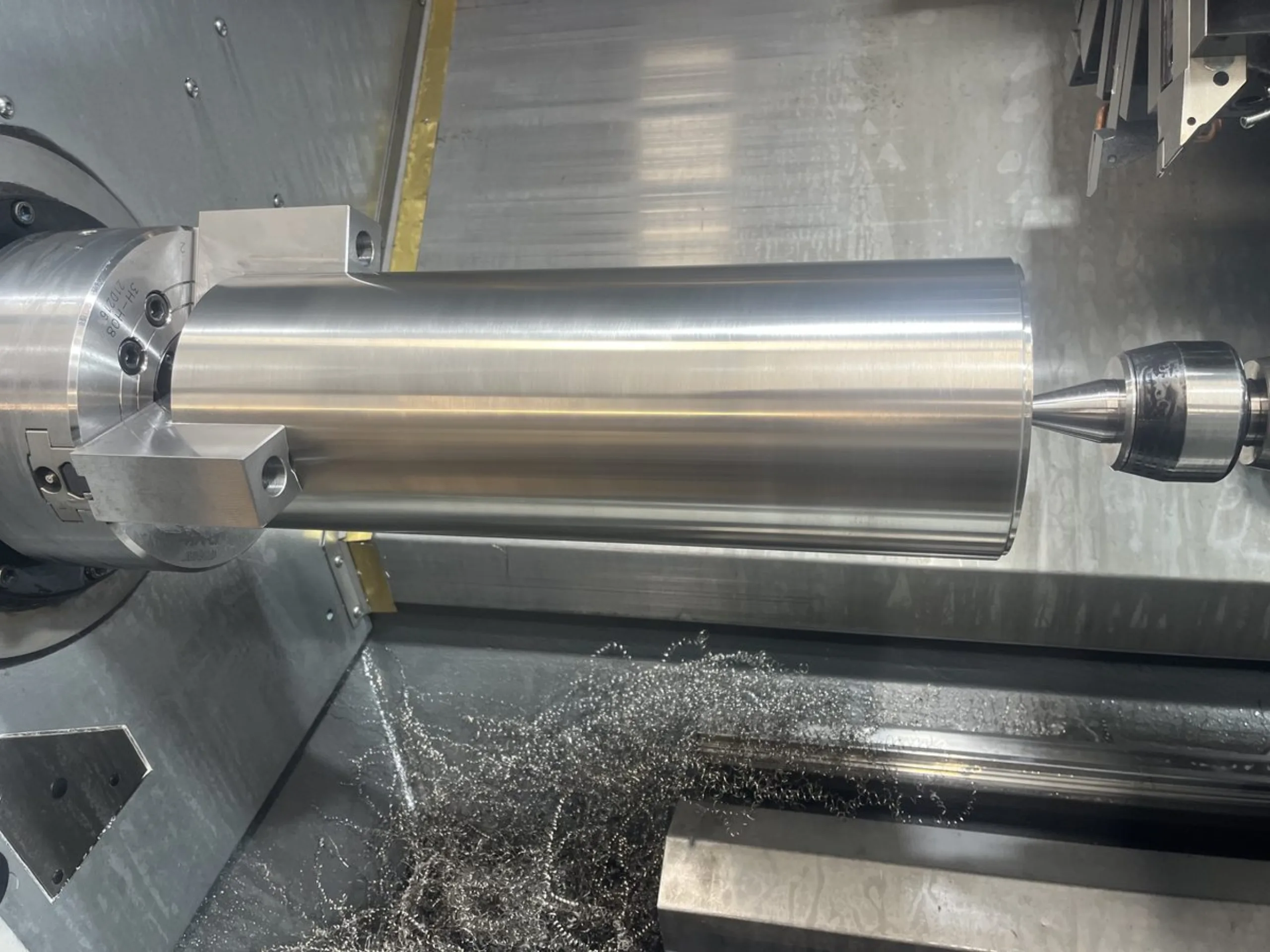
CNC turning utilizes a rotating workpiece against a rotating cutting tool to produce highly concentric cylindrical components—including shafts, bushings, housings, and complex threaded features. Critical Dimensions CNC operates advanced live-tooling equipment, allowing us to combine turning and milling operations on a single machine. By eliminating secondary setups, we drastically reduce cycle times, eliminate part-handling variance, and consistently hold tight tolerances down to .0001″.
Secondary machining operations drive up lead times, setup costs, and tolerance stack-up on turned parts. Rather than re-fixturing a shaft on a separate mill to add flats, cross-holes, keyways, or hexes, we execute those features while the workpiece remains locked in the chuck. Live-tooling capability allows us to deliver complete, multi-process components in a single setup—ensuring exact feature-to-feature alignment and predictable delivery dates.
What Every CNC Turning Job at Critical Dimensions CNC Includes
Every turned order undergoes the exact same upfront operation planning, disciplined setup control, and dimensional inspection—whether you need a single prototype shaft or a full production lot.
- Mill-Turn Machining Capability. Completes complex turning and live-tool milling in one continuous operation.
- Consolidated Single-Setup Routing. Finishes features in a single chucking to protect dimensional call-outs and cut lead times.
- In-House CAM Programming. Keeps toolpath control internal for fast updates.
- Extreme Diameter & Bore Accuracy. Holds critical tolerances down to .0001″ for smooth drop-in assembly fitment.
- Engineered Thermoplastics & Aerospace Alloys. Machines sensitive plastics through superalloys while considering potential distortion.
- Rigorous Dimensional Verification. Validates all GD&T callouts and surface finishes with specialized metrology tools before release.
How CNC Turning Works at Critical Dimensions CNC
Send the Print
Submit your drawing through the website form or by email to [email protected]. Phone quotes start at (443) 517-9123, Monday–Friday, 8am–6pm.
Print and Material Review
The drawing gets reviewed against tolerance, material, and workholding requirements.
Operation Planning
Features get sorted between turning and driven tooling before programming starts. That decision determines how many times the part is handled.
Programming and Machining
Toolpaths get built around the specific part. Live tooling keeps operations on one machine where the geometry allows it, which limits how much position error can accumulate between features.
Inspection and Delivery
Parts are inspected to an AQL of 1.0%, Level II per ANSI/ASQ Z1.4 and reviewed against the drawing before shipment. Invoicing follows on Net 15 terms.
Why Do Turned Parts Often Cost More Than the Print Suggests?
Secondary operations are usually the hidden cost driver. When a shaft requires a cross-hole or flat, moving it from a lathe to a mill adds extra setup time, routing steps, and the risk of datum shift between operations. Where part geometry allows, our live-tooling turning centers eliminate that handoff—completing milled features in a single workholding to lower piece-part costs and protect feature-to-feature tolerances.
Additional Services That Support Turned Parts
Turned parts leave the shop for Aerospace & Defense, electronics, robotics, medical, marine, and automotive customers.
 CNC Milling
Milling on CNC machining centers, plus conventional milling for work that does not require a full CNC setup.
 3D Printing
Printed parts produced in house on the shop's own printers.
 Reverse Engineering
Existing parts measured and modeled when no drawing is available.
What Tolerances Can Critical Dimensions CNC Hold on Turned Parts?
We consistently hold close tolerances down to .0001″ on turned features. Because material stability and tool deflection vary drastically between engineered plastics and hardened aerospace alloys, practical limits always depend on part geometry. Rather than relying on generic capability claims, we review your print against actual feature-to-feature requirements before quoting to guarantee achievable, repeatable precision.
Why Tight Turning Tolerances Depend on Measurement
A tolerance of .0001 inches is roughly 2.5 micrometers. At that scale the measurement becomes as much a variable as the cut. Gauge resolution, thermal expansion in the part and the gauge, and operator technique all consume part of the tolerance band before the machine is accounted for.
That is the problem the NIST Dimensional Metrology Group exists to solve. NIST disseminates the SI unit of length to U.S. industry through calibration services, performing thousands of calibrations each year for manufacturers, universities, and the military. Every dimensional measurement traceable to a national standard traces back through that chain.
For buyers, the practical takeaway is direct: when a print calls for tenths, the conversation about how the feature will be verified belongs in the quote, not after the parts arrive.
Frequently Asked Questions About CNC Turning
What materials can Critical Dimensions CNC turn?
The shop turns plastics including Delrin and polycarbonate, and it runs difficult metals such as titanium and Inconel. Because the material range covers both ends of that spectrum, an assembly with mixed materials does not have to be split across separate vendors. PTFE, Nylon, Aluminum, Steel, Stainless Steel, etc.
What does live tooling capability mean for my part?
Live tooling drives rotating cutters while the part stays in the turning setup. Flats, cross-holes, and keyways get cut without moving the part to a mill. Fewer setups mean fewer opportunities for turned and milled features to shift out of position relative to each other.
Can Critical Dimensions CNC turn low-quantity or one-off parts?
Low quantities are never the reason jobs are turned down at this shop. Larger vendors schedule around volume and often decline short runs. Critical Dimensions CNC remains committed to serving the customers needs whether big or small.
How do I get a CNC turning quote?
Send your drawing through the website form or by email to [email protected] or call the company directly at (443) 517-9123 during business hours.
Ready to Quote Your Turned Components?
Reliable CNC turning starts with planning the routing before quoting the job. Critical Dimensions CNC evaluates every print upfront—strategically dividing features between main-spindle turning and live tooling before a single toolpath is written. Submit your drawings today for a transparent, engineered quote built around your exact tolerances and schedule.